Bricks and Balls Crusher
- 4.4
- Rating
- 5.00M
- Installs
- Free
- Price

 Analysis by App-foxy
What keeps me coming back to Bricks and Balls Crusher is its central idea: aim a shot, send a stream of balls into a brick layout, and try to remove everything with as few wasted opportunities as possible. It is a simple arcade game, but the simplicity is exactly what makes it useful when I want something I can understand immediately without committing to a long session.
After spending time with it, I see the game less as a reflex challenge and more as a small planning exercise. The important decision is not merely where the first ball should go. I have to think about the angle, the way the balls will bounce, and whether a single shot can reach several useful surfaces before returning. That extra layer gives the familiar brick-breaking format a satisfying sense of control.
It is free to play, aimed at Everyone, and comes from Tee Studio. The game belongs firmly in the arcade category, but it feels calmer than an old-fashioned paddle-and-ball game because the main pressure comes from choosing a good trajectory rather than constantly moving a paddle. That makes it a comfortable fit for short breaks, waiting rooms, or a quiet few minutes before bed.
You May Also Like

 Blood Strike: 2.5 Anniversary
Blood Strike’s Loadouts Turn Every Drop Into a Tactical Gamble
A close look at Blood Strike’s custom loadouts: how fast access to signature weapons reshapes its battle royale rhythm, rewards preparation, and narrows the gap between fights.

 Pandora - Music & Podcasts
Pandora’s Music Is Easy to Start, but Harder to Recover
Pandora’s strength is its low-effort path from a seed to a station. Its weak spot is how much confidence it asks you to place in connection, setup, and quiet recovery.

 8 Ball Pool
 Is Built on Rivalries, Rematches, and Routine
A close look at the rivalries, rematches, shared routines, and unanswered safety questions that turn a quick pool match into a persistent mobile community.

 Samsung Music
’s Quiet Strength Is Playing What You Already Own
Its reach comes less from spectacle than from dependable access to a personal library. That simplicity is both the app’s strongest retention engine and its ceiling.

 AccuWeather: Weather Radar
AccuWeather Review: A Quick, Clear Forecast for Everyday Decisions
For everyday plans, the best forecast is the one you can understand quickly. AccuWeather makes rain timing, radar, and local conditions easy to act on, with a few trade-offs.

 Hill Climb Racing
Why Hill Climb Racing Still Turns Crashes Into One More Run
A tiny car, a bumpy hill and one more upgrade: Hill Climb Racing keeps resurfacing because its simple chaos makes every near-miss feel personal.
More From Our News Desk



Why the aiming mechanic matters more than the brick breaking
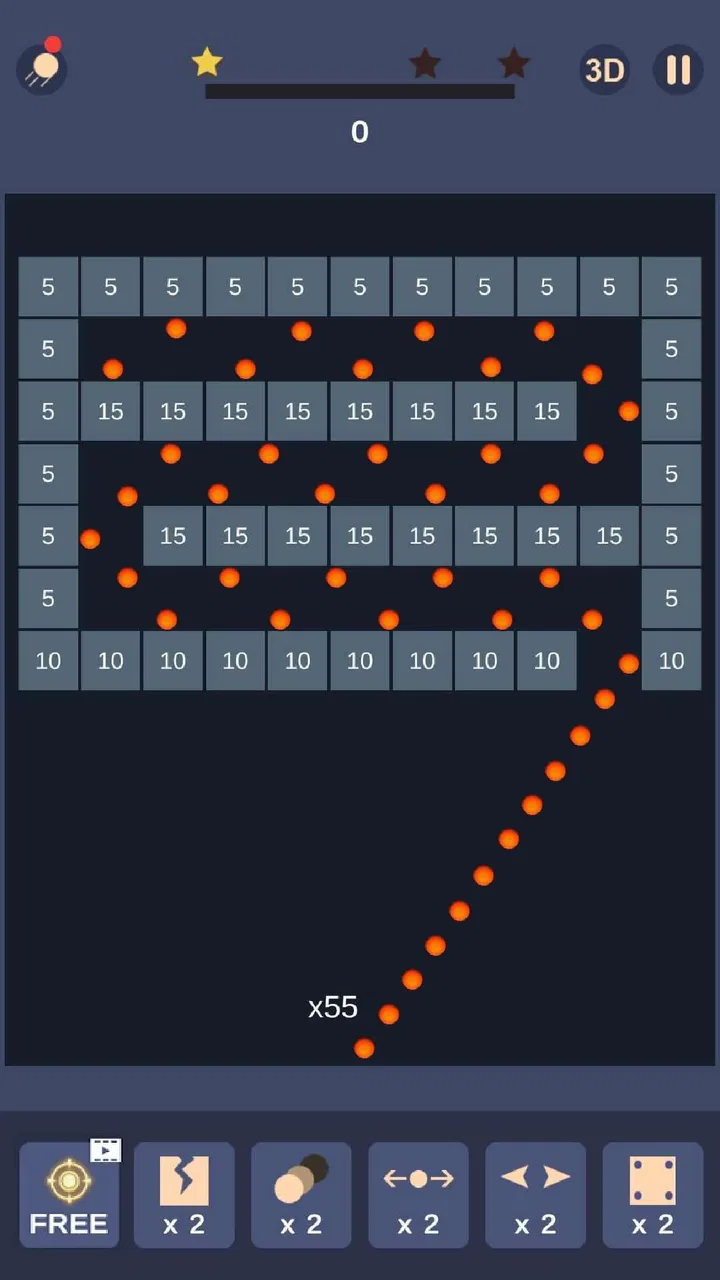
The verified capability worth focusing on here is the aiming system. The game asks me to direct the launch, and that choice determines how much value I get from the entire attempt. A poor angle can leave balls hitting the same area repeatedly, while a carefully chosen line can open a path through several bricks and create a much more productive turn.
This changes the mood of each level. I am not simply tapping to make something happen. I am inspecting the arrangement, identifying a useful first contact, and estimating how the rebound might carry the balls into places that are harder to reach directly. Even when the result is not perfect, the cause is usually understandable: my angle was too shallow, too direct, or aimed at a section that offered little follow-up.
The real strength is the feedback between one decision and the next. A shot teaches me something about the layout. If the balls spread too widely, I can try to create a tighter entry angle on the following attempt. If they become trapped in a repetitive path, I know that reaching a different side of the formation is more valuable than simply striking the nearest brick.
That makes the game more thoughtful than its short description suggests. It is still accessible arcade entertainment, but the most rewarding moments come from reading geometry rather than reacting quickly. Players who enjoy finding efficient solutions will probably get more from it than players who only want constant action.
How a normal turn feels in practice
When I begin a level, I first look for a line that can make the balls travel across the formation instead of stopping in one small pocket. The first impact matters because it sets up the rest of the movement. A direct shot at the closest target may feel safe, but it can be less useful than a line that reaches a side wall or a less protected brick and then changes direction.
I also try not to judge a shot only by its opening impact. The better question is whether the full route will touch several parts of the arrangement. This is where patience helps. A few seconds spent studying the available angle can be more valuable than launching immediately, especially when the layout offers a narrow route into its center.
The game works well for players who like repeatable, understandable rules. I can see why a shot succeeded or failed, and that makes retrying feel purposeful rather than random. The challenge comes from improving the decision, not from learning a complicated control scheme.
One useful habit is to aim for a change in direction rather than always targeting the densest visible group. A side contact can send the balls back through the formation and increase the number of meaningful collisions. This is not a separate mode or hidden system; it is simply the practical consequence of treating the board as a space to navigate.
Another helpful approach is to protect the quality of the return path. If the balls finish in an awkward position, the next launch can become much less flexible. I therefore consider where the balls are likely to come back from, not just what they will hit on the way out. Thinking one turn ahead makes the game feel more deliberate and reduces the temptation to chase immediate damage.
The best everyday use for this game
My favorite situation for it is a short, interrupted break. Imagine waiting for an appointment or sitting on public transport with only a few minutes available. I can open the game, play a level or part of one, and stop without needing to remember a complicated story or manage a long-term team. The aiming mechanic gives those brief sessions enough substance to feel like play rather than pure time filling.
It also suits someone who wants a low-pressure arcade game but still likes having a decision to make. Compared with a traditional brick game that depends on keeping a paddle alive through rapid movement, this one puts more emphasis on planning a route. Compared with a match-style puzzle game, it offers less focus on arranging pieces or building combinations and more focus on angles and rebounds.
That difference matters when choosing an alternative. If I want fast reflexes and constant movement, a classic paddle-based brick breaker may be more exciting. If I want a deeper puzzle structure with multiple systems to manage, a dedicated physics puzzle game may offer more variety. Bricks and Balls Crusher sits between those choices: quick to understand, but thoughtful enough to reward careful shots.
A particularly good routine is to play it when I am mentally tired but still want a small challenge. I can concentrate on one layout without having to absorb a large amount of information. The game gives me a clear objective and immediate feedback, while the aiming decision keeps the session from becoming completely mindless.
I would not choose it for a social gaming night or for a long story-driven session. Its appeal is personal and focused. The pleasure comes from improving my own reading of the board, so it is better for a player who enjoys quiet repetition than for a group looking for shared surprises.
Where the simplicity helps, and where it limits the experience
The straightforward design is one of its biggest advantages. I do not need a tutorial-heavy introduction to understand the objective, and the controls are easy to approach. That makes the game friendly to casual players and to anyone who wants to start playing immediately.
At the same time, a simple core can become repetitive if I expect a wide range of mechanics. The main satisfaction remains tied to aiming, bouncing, and clearing brick arrangements. Players who need frequent changes in rules, character progression, or a strong narrative may find the experience too narrow over longer sessions.
The free entry point is convenient, but in-app purchases range from $0.99 to $99.99 per item. I would treat that as a reason to check the purchase settings before handing the device to a child, even though the content rating is Everyone. The game can be approached as a free arcade title, but the presence of optional purchases is still relevant for families and for anyone trying to keep mobile spending tightly controlled.
There is also a difference between challenge and friction. When a shot fails because I misread the angle, I usually want to try again. If I am playing while distracted, however, the same need for careful positioning can feel less relaxing. This is not a game I would recommend when I want completely passive entertainment; it asks for enough attention to make each launch meaningful.
The current version is 1.5.7.7, and the game supports devices running Android 7.0 or later. That makes it accessible to many Android users, but anyone using an older device should check compatibility before planning around it. On a supported phone, the concept is well suited to touch controls because the central action is selecting a direction rather than managing several buttons at once.
Small techniques that make the aiming more satisfying
My first practical tip is to look for the least obvious entry point. The nearest brick is not always the best target. A shot that reaches a side or lower section can create a longer route through the arrangement, while a direct hit may spend most of its movement in one predictable area.
Second, I try to value spread and access differently. A wide scatter of impacts can look impressive, but it is not automatically efficient. If the balls reach many bricks without opening a useful route for the next turn, the visual activity may not translate into progress. I prefer a line that creates access to a difficult section, even when the first result appears smaller.
Third, I avoid changing my plan too quickly after a disappointing opening. The rest of the shot can still produce useful rebounds. Watching the complete movement helps me understand whether the angle was fundamentally wrong or whether the initial contact simply looked less effective than expected. That observation makes later attempts more informed.
These habits are especially useful when I play in short bursts. Instead of repeating the same launch mechanically, I can identify one specific adjustment for the next attempt: a higher contact, a more open entry, or a route toward an isolated area. The session then has a clear purpose, even if I only have time for a handful of turns.
Who will enjoy it most
I think the strongest audience is made up of casual arcade players who like simple rules with a little planning underneath. It is also a good choice for people who enjoy physics-like movement and the satisfaction of watching one decision produce a chain of results. The game does not require specialist knowledge, so it can be picked up quickly by someone who rarely plays mobile games.
It may also work well for younger players because the objective is easy to understand and the content rating is Everyone. For parents, the sensible approach is to keep an eye on the in-app purchase range and use the device’s purchase protections if necessary. The game itself is approachable, but purchase awareness remains part of responsible mobile use.
I would be more cautious recommending it to players who want a large amount of content variety. Someone looking for a competitive leaderboard focus, a story campaign, or complex character development may prefer another arcade or puzzle title. Likewise, players who dislike retrying a layout to refine an angle may see the central loop as repetitive rather than rewarding.
The audience size suggests that the format has broad appeal: it has passed 5 million installs, with a 4.4 average from around 21 thousand ratings and roughly 1.8 thousand written reviews. Those figures do not replace personal taste, but they fit my impression that the game is easy to approach while still offering enough decision-making to keep casual players interested.
My final take after focusing on the core loop
Bricks and Balls Crusher succeeds because it gives one mechanic enough room to matter. The act of aiming is not just a way to start the level; it is the main source of strategy, and the quality of each turn depends on how well I read the available route. That makes the game more engaging than a purely automatic brick-clearing experience.
I recommend it if you want a free arcade game for short sessions, especially if you enjoy testing angles and learning from failed attempts. It is easy to start, suitable for Everyone, and available from Tee Studio for Android devices using version 7.0 or later. The optional purchase range is worth remembering, but it does not change the basic reason to try the game: the launch decision is quick, clear, and surprisingly satisfying when it works.
I would skip it if your priority is constant speed, a deep progression system, or a broad collection of unrelated modes. For everyone else, this is a pleasant middle ground between a traditional brick breaker and a small physics puzzle. I keep returning not because it overwhelms me with features, but because one well-chosen angle can still make a familiar idea feel rewarding.
FAQs for Bricks and Balls Crusher
01What is Bricks and Balls Crusher?
Bricks and Balls Crusher is a casual arcade game in which you launch balls toward numbered or colored bricks to break them before they reach the bottom of the screen. Each shot can bounce off walls and hit multiple targets, so aiming carefully is essential. The game is designed for short sessions and combines simple controls with progressively more challenging levels.
02How do you play Bricks and Balls Crusher?
To play, press and drag your finger to choose the direction of the shot, then release to launch the balls. The balls bounce around the level and reduce the numbers displayed on the bricks with every hit. Your objective is to clear as many blocks as possible before they descend too far. Angles, rebounds, and power-ups can make a major difference.
03Is Bricks and Balls Crusher free to download and play?
Bricks and Balls Crusher can generally be downloaded and played without an initial purchase, making it accessible to casual players. However, free versions of this type of game may include advertising, optional in-app purchases, or extra items that can speed up progress. Before downloading, check the store listing for the current pricing, payment options, and age information.
04Does Bricks and Balls Crusher require an internet connection?
The basic gameplay of Bricks and Balls Crusher may work without a constant internet connection, which is useful when traveling or playing offline. Nevertheless, some features, such as advertisements, rewards, cloud synchronization, leaderboards, events, or purchases, may require access to the internet. Availability can vary by version, device, and operating system.
05Is Bricks and Balls Crusher suitable for children?
Bricks and Balls Crusher uses straightforward controls and generally accessible arcade mechanics, so it can be easy for many children to understand. Parents should still review the app-store age rating, advertising content, and in-app purchase settings before allowing younger players to use it. If the game connects online, parental controls are also recommended for safer play.
Pros
- Simple controls make it easy to start playing immediately.
- Short levels are well suited to quick gaming sessions.
- Brick-breaking mechanics offer satisfying visual feedback.
- Progressive challenges help maintain interest over time.
- Works well as a casual game for players of many ages.
Cons
- Some levels may feel repetitive after extended play.
- Difficulty can become uneven in later stages.
- Frequent ads may interrupt the gameplay experience.
- Limited strategic depth compared with more advanced puzzle games.
- May require patience when clearing crowded brick formations.

Bricks and Balls Crusher
Gallery